Cannes Lions 2026 || On July 20, 2026 I hosted a meetup at Kaltura, in their Tel Aviv offices, all about the Cannes Lions Festival of Creativity 2026. It has become a real tradition of mine over the last few years: to take what I learn in Cannes and bring it back here, to hand the community of people who follow me the things that are actually worth knowing. In this post I want to share part of the insights I spoke about. If you want the full lecture, you are welcome to talk to me and bring me into your organization. I also tailor the content to the industry you work in, with cases that are relevant to you.
This was my 15th time at the Cannes Lions Festival, and with time I have gained a perspective on the things that shift inside this enormous event platform. And from that perspective you can also read the changes that are happening in life itself.
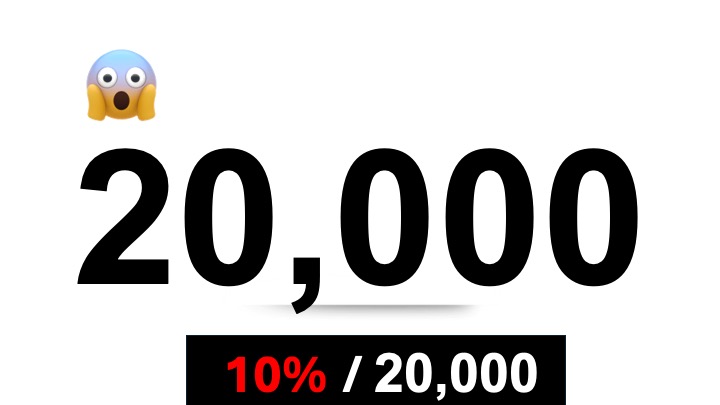
One of the things that really bothers me is the strange funnel of entries into that glamorous awards ceremony. Every year around twenty thousand entries are submitted. Only 10 percent of them make the shortlist, only 3 percent reach bronze and silver, 1 percent reach gold and the Grand Prix, and less than 1 percent reach Titanium. In my eyes that is a terrible formula, because innovation and creativity are supposed to make an impact at far higher rates. I propose a completely different formula: 10 percent that get meaningful recognition, and manage to dramatically shift the playbook of the entire industry.
Every year over the last few years I arrive in Cannes with a concept of my own, a theme that my ear and my attention travel with, looking for points of contact with what gets said on the stages.
This year it was especially complicated, because all of us are living inside a big chaos of things happening around us. So I decided to simplify things and go back to the basics.
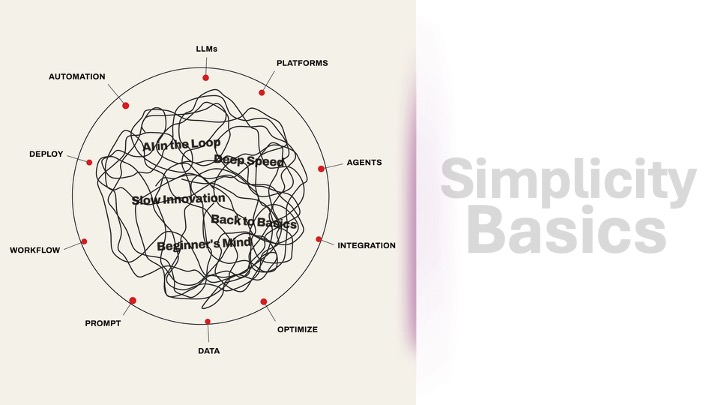
The concept I traveled to Cannes with is: Back to Basics.
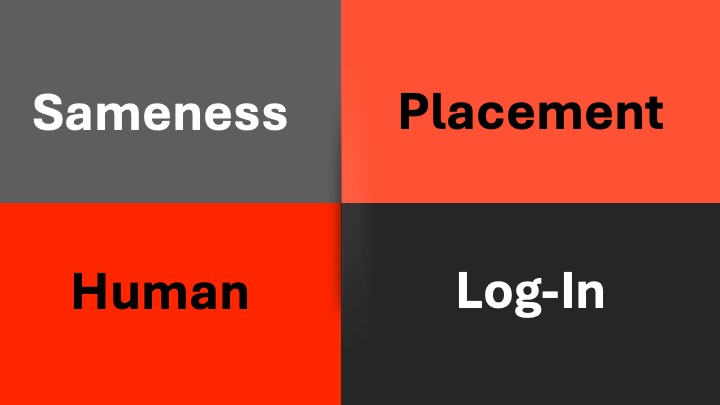
Across the days of the conference, I heard four things that echoed for me in a significant way out of everything said on the different stages: Sameness, the same thing out of the same thing. Placement, the ability to serve. Log-in, the way you can get into a slot inside people’s lives and bypass all the noise. And last, Human, which may sound trivial, but in my eyes we need to go back and revisit the whole idea of being human.
I start with the first bucket, Sameness. In Cannes they sharpen the friction between human and machine, between artificial intelligence and human creation. But I think that is not the main thing. In my eyes the biggest risk we have been living with in recent years, especially because of how accessible artificial intelligence has become, is a lack of differentiation. That sameness is what puts at risk the way we can build real, strong brands. The question is not whether we use artificial intelligence or not. The question is whether we use artificial intelligence well.
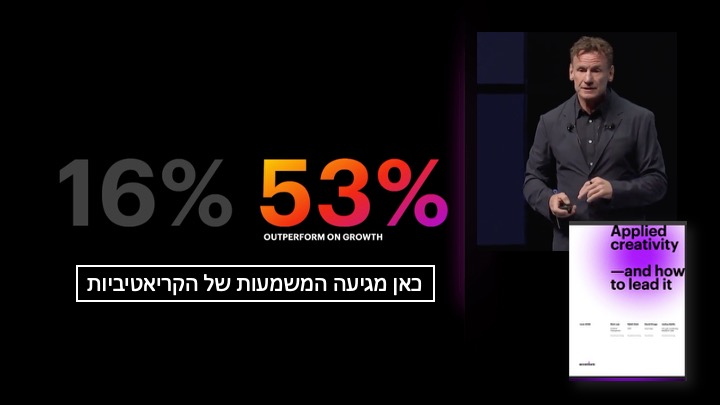
In an excellent talk by Nick Law of Accenture Song, the creative arm of Accenture, he talked about a deep study his company ran on businesses across different industries that invest in innovation. The study shows that 81 percent of companies report that they invest in innovation and in new ideas. But, only 16 percent actually bring those ideas to life. Those are in fact the differentiation group, the group that does real innovation, the kind that meets life itself.
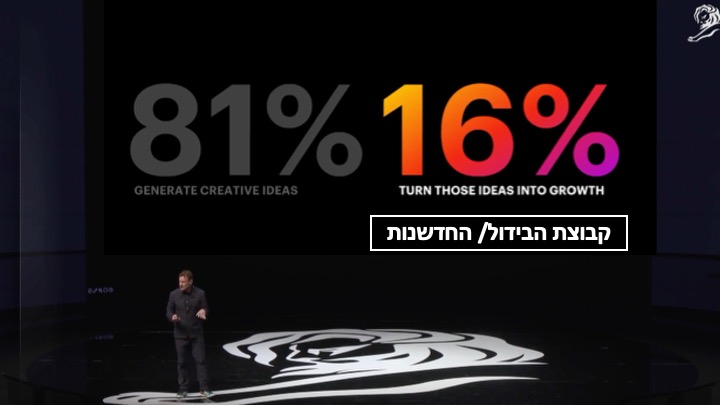
And it is important to say, the study shows that those same companies, out of the 16 percent, report business results and growth 53 percent higher than everyone else. This is where the real meaning of creativity shows up. By the way, I strongly recommend going into the Accenture Song website and downloading the study. The full version is simply packed with insights and with working tools that will matter to you.
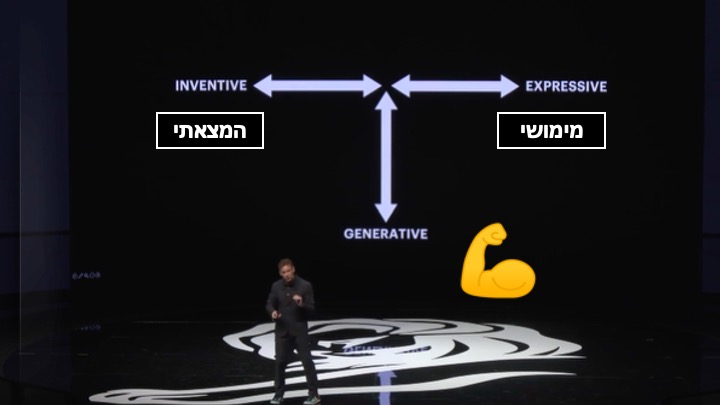
When you look at those 16 percent, they actually have two arms. One is the inventive arm, the arm that produces ideas and innovation. But the second is the one that brings in the real achievements: the execution arm. Because it is the arm that takes those ideas into actual real life. And there is one more arm entering the mix, and it works like a new muscle for us: the whole generative capability that can take what we do and optimize our abilities, and complete the places where we are not strong. What does that mean? With artificial intelligence we can create more practical innovation.
The second bucket is Placement, our ability to serve information in unexpected places. And it is important to say: in the reality we live in today, with the load of messages all around us, it is harder and harder to create that point of differentiation we just talked about. Creating placement is critical if we want to rise above the noise and stand out.
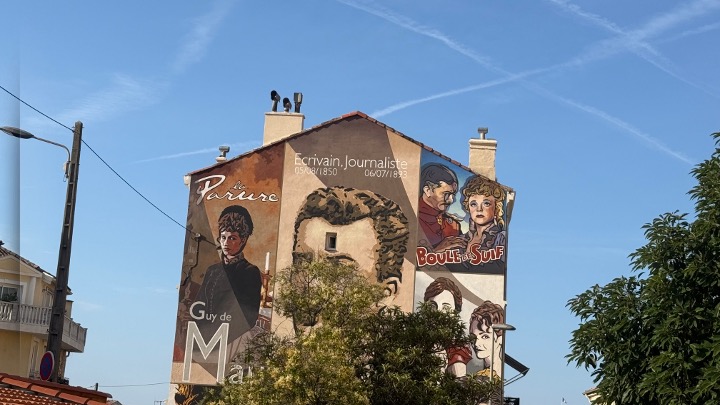
On my way to the festival, every single day I passed this building with pieces of history painted on it about Guy de Maupassant, the French writer and creator. It was a very good picture of something built on a new placement, something that creates meaningful differentiation from everything else you see in the landscape around it.
Now, I want you to understand how significant this is. Mark Ritson, professor of marketing, talks about it beautifully: as people we are limited in our mental availability. And in order for us as brands to get into that mental availability, we are required to do things that sit outside the sameness, and creating new placements answers exactly that. It also does something else that matters: memory encoding. A brand’s ability to burn itself into the consumer’s memory is critical, because in real time we as people will pull out the right answer we stored inside our brain.
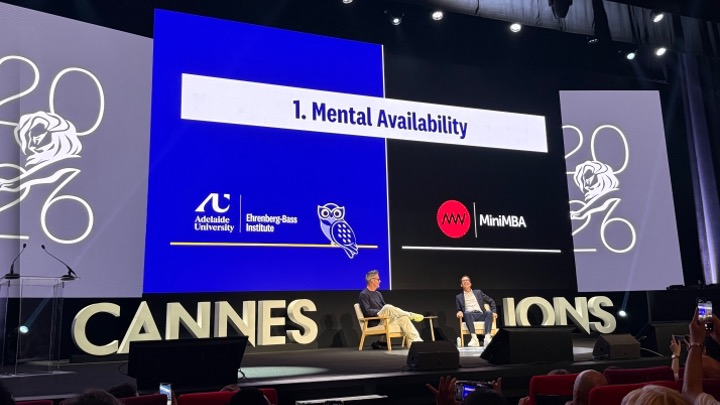
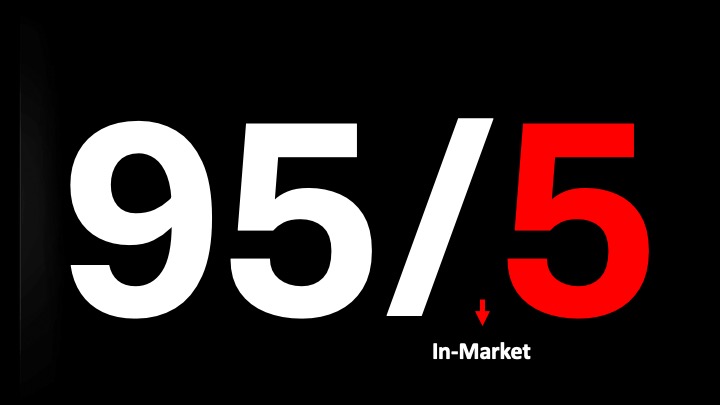
The main reason? At any given moment the people who consume your brands are not really in the market. They sit inside a very large group that has no need right now to consume your brand or your product. But the moment they are in market, they will pull you out of their memory and choose you. That is the central reason why you need to build a memorable brand.
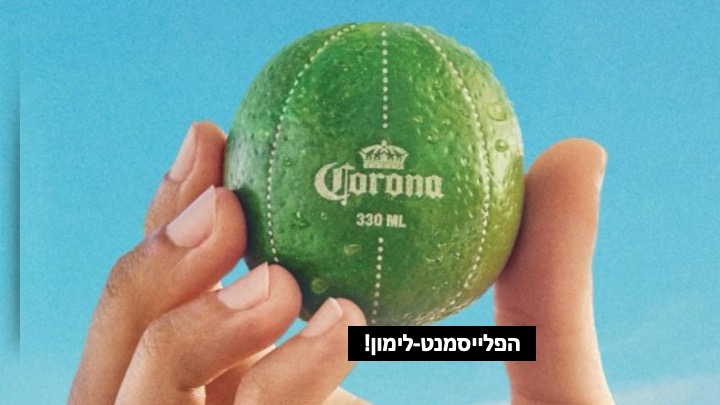
Take for example this move by Corona, who understood that people do not know how to cut the lime well enough to fit it precisely into the bottle. So they turned the lime itself into a placement in practice, one that shows people exactly where to cut so it comes out right. The placement in this case is surprising, differentiated, different, and it also turns into a utility.
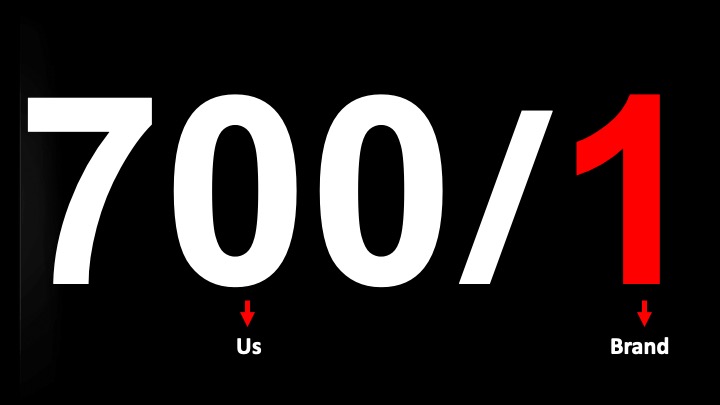
Another thing you need to take into account: the importance of consistency. Consistency is a significant recipe for a brand. At any given moment you, the people managing the brand, think only about it. But the people who consume you are holding 700 different brands in their head at any given moment, and they do not necessarily have the mental availability to remember you of all brands.
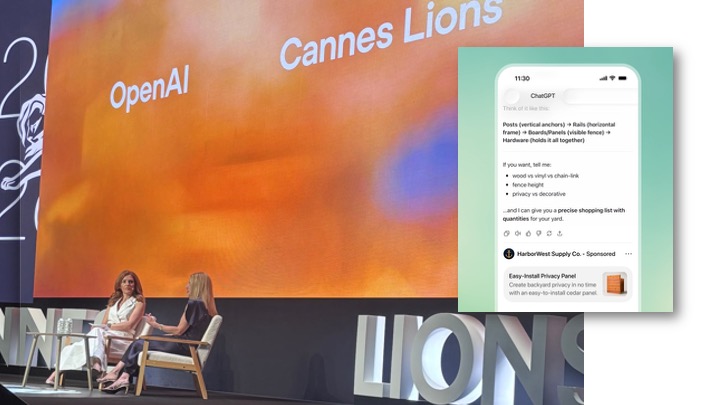
Additional placements being born in the space are for instance the new way advertising is served inside platforms like GPT. The fact that we can discover advertising content, come into contact with it, talk to it, interrogate it, tailor it and create together with it turns advertising and the advertising surface into something completely new.
The third bucket relates to something I call Log-In. How can we as brands get into the slot of people’s lives and into that mental availability? How can we pass through the full force of the noise and also stay memorable in people’s minds?
When you look at the idea of log-in, you have to start from insights, human insights, like in any good strategy: whether it is a product strategy, a marketing strategy or a technology strategy.
The SVP of strategy at Publicis France talked about this very beautifully on the stage in Cannes, and told a small story that illustrates the right way to build a human insight and turn it into a strategic, meaningful action in service of your goal. Listen to her lovely story in the following video:
And when you talk about log-in and strategic insights, it is worth going back to the fundamentals, to the basics.
Create ideas that spark the imagination, ideas that make other people talk about you, instead of you being busy all day talking about yourself.
The global CMO of Unilever managed to deliver the idea in a precise and stunning talk. He really connected the points I am talking about here in this post in an amazing way, and mostly he positioned himself in this same area of back to basics, as the way we need to think about brands and the way they survive. I added a short video clip from his talk for you:
The last bucket actually focuses on being human, and that may look trivial, but in my eyes we need to go back and revisit the idea of meaning inside being human, in a world that is becoming so technological, with threats from what the machine can do to our lives.
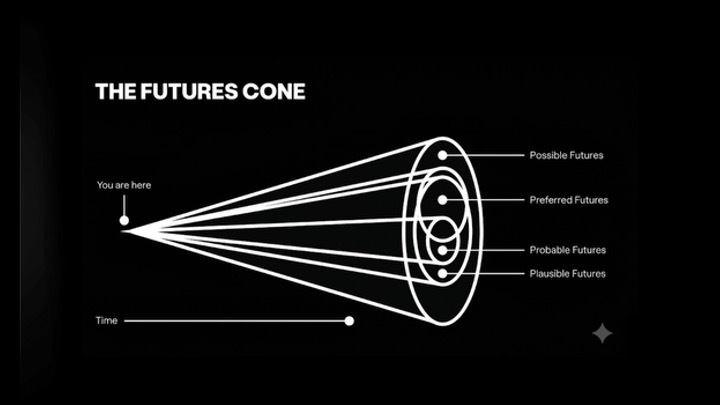
When we talk about the future as people, a lot of the time we determine that the future will be this way, or that way. But you have to take into account that the future includes several futures, several scenarios and not one. It is human to understand that there is more than one scenario and more than one future. Take a look at the futures cone, a tool that can help you a lot in thinking forward.
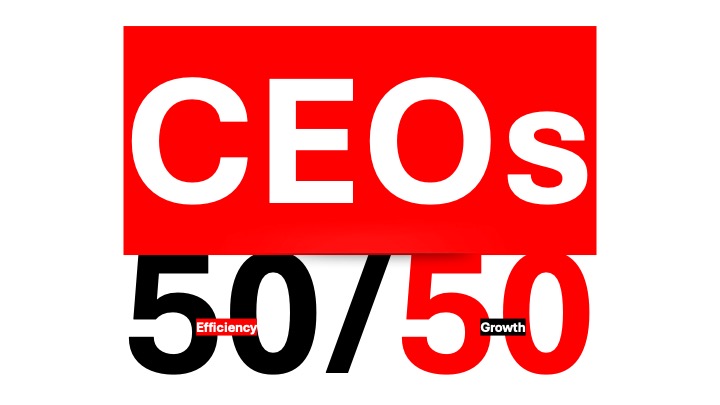
For example, when you ask CEOs, in a closed event at the festival, what they think about the future through the tools of artificial intelligence, there is no single truth. There are at least two. Roughly fifty percent say that artificial intelligence will help with everything connected to effectiveness and efficiency. The other fifty percent see a future where artificial intelligence dramatically shapes the entire strategy of the company. As you can understand, being human tells several stories and not one.
Stella McCartney for instance, in a joint panel with eBay, talked about how the uniqueness of being human lies in the fact that we are broken, that we are not perfect, that we each carry our own unique legacy.
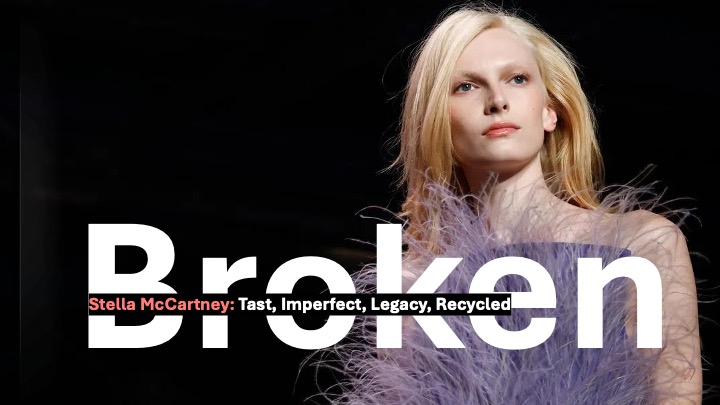
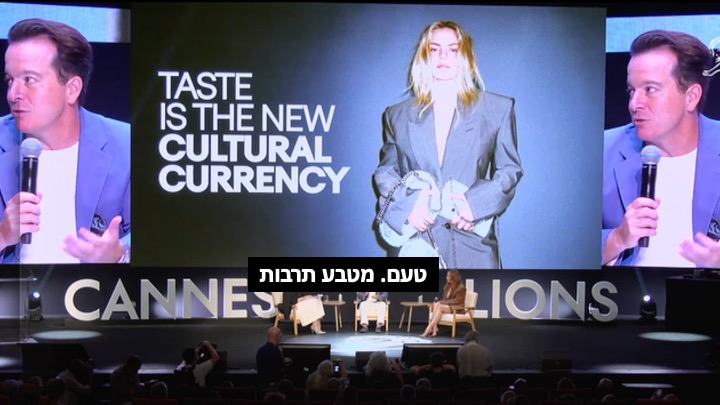
And think about this: taste is becoming the currency of culture. Artificial intelligence has no taste. We as people do, it is unique to us, and it has power and impact on the way culture actually takes shape.

Look for example at this creator on Instagram. He specializes in avant-garde fashion and assembles outfits out of recycled materials and objects from life. That, in my eyes, is what you call taste meeting culture. No artificial intelligence can do that.

But to get to that place, in order to create things with that kind of sensitivity, you have to take risks, you have to think with an innovation head. On one side it is human to strive for excellence and for safe places. On the other side we will not produce anything new, we will not produce innovation, without taking risks.
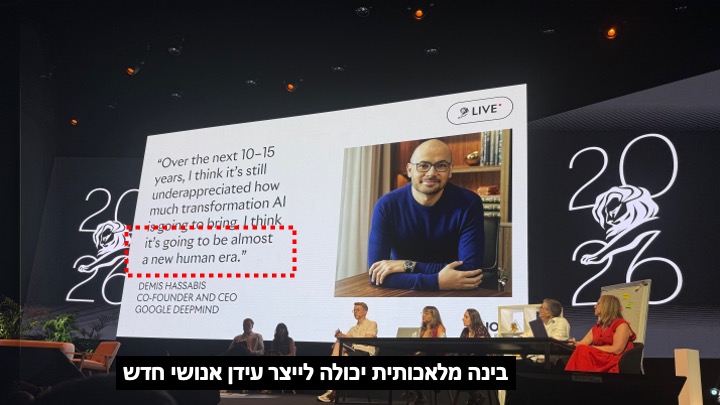
Artificial intelligence will not necessarily replace us. According to Demis Hassabis, who leads artificial intelligence at Google, it may be that artificial intelligence will actually create a new human era.
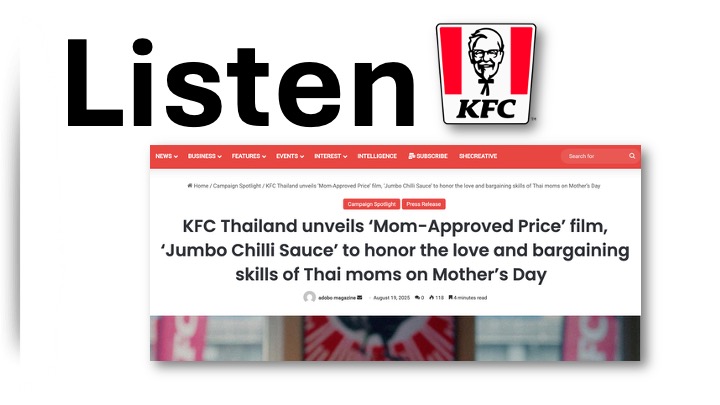
In the end it all comes down to the idea of listening! Our ability as people to listen to things and to connect between opportunities. KFC brought an interesting story: mothers in Thailand were complaining on social media that the sauce packets they get are too small for family portions. So for Mother’s Day the brand launched giant sauce packets. That is what a brand that knows how to work through listening looks like.
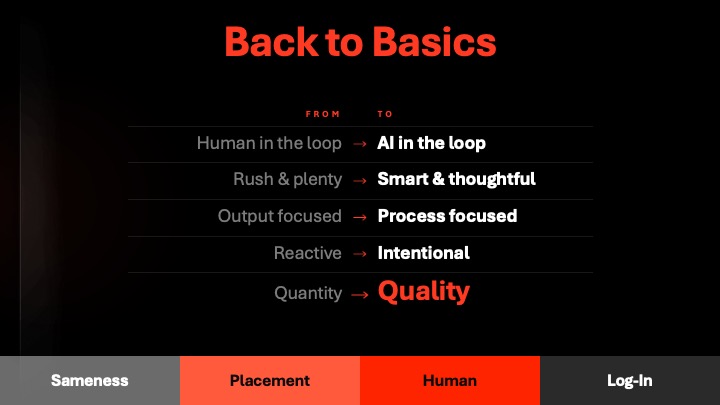
I loop back to the beginning, back to the basics, and I am putting here in one slide the principles that will help you manage your decisions well. Instead of thinking about a human in the loop of artificial intelligence, flip the order. Instead of producing a huge amount of things fast, think about it in a smart way, full of insight. Instead of being focused on the output you create, think about processes. Instead of being reactive, be goal-driven, unless your reactivity came out of listening. And do not be focused on quantity, be focused on quality.
This is me, Zohar Urian, these are my details, and if you want to book a full lecture about the Cannes Lions Festival with insights and cases connected to the world of content and to your industry, you are very welcome to reach out to me.